
Sunday, August 7, 2011
Sundry things
I am fixing things, ever so slowly. Google's campaign for world domination has wrought some negative effects on my little corner of the blogosphere. Luckily, the damage is reversible. Just painfully tedious to pick-through, html-wise. Here is another picture, to get us through the dark times:

Wednesday, August 3, 2011
Pardon my dust
You might have noticed that a lot of my images seem to have disappeared overnight and turned into sad, indifferent little icons.
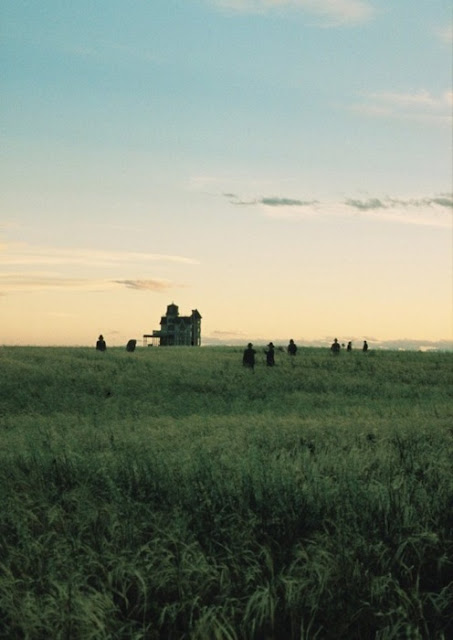
I've been using Picasa to store my images. Apparently they changed something within the past few days, which means I'm going to have to fix a lot of posts. Don't worry, it will be fine. In the mean time, here's a beautiful image from Days of Heaven, just for fun.
I've been using Picasa to store my images. Apparently they changed something within the past few days, which means I'm going to have to fix a lot of posts. Don't worry, it will be fine. In the mean time, here's a beautiful image from Days of Heaven, just for fun.
<
Friday, July 29, 2011
Mccabe & Mrs. Miller
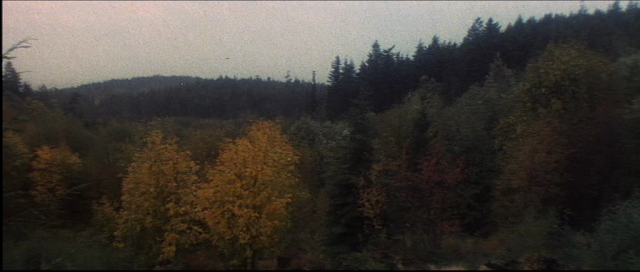
I obviously have no idea what is was like to live in the West, but Altman's vision seems so real, I have a hard time imagining it to be any other way. Altman's movies are very special to me, because, unlike many modern-day independent films that grasp at verisimilitude through a "gritty" portrayal of reality (which often just seems to me like lack of imagination), Altman's movies actually sort of achieve this believability. At the same time, they are mythical enough to fascinate. Though the dialogue is "realistic" it rings much more true than the dialogue in, say, a mumblecore film. It is more like verite, but fictional. Roger Ebert puts it better than me in his Great Movies essay on the film: "All of the characters know each other, and the camera will not stare at first one and then another, like an earnest dog, but is at home in their company." As in real life, scenes are filled with overlapping, often inaudible chatter. But, as Ebert notes, "sometimes all that matters is the tone of a room."
Tuesday, June 21, 2011
Thelma and Louise
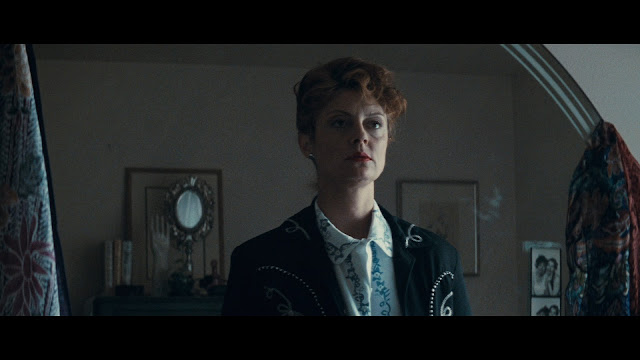
I appreciate this movie for putting me back in touch with the child I used to be, the child who was just discovering the magic of the moving image, the magic that could suck you in and make you feel something different than you felt every day. If a movie struck some chord with me, I would start it again immediately after it finished, just to return to that feeling and to lose myself inside it. That kid had no idea that the study of movies, or books, for that matter, was even possible. She didn't have any aspirations or deep philosophies where movies were concerned. A movie was something that existed on a different plane of reality. In my dreams and fantasies, I could find my way back there. It was sort of like looking for the hidden gate to Narnia, which I was also obsessed with, once upon a time. Thelma and Louise makes me feel like that kid again. The only sign that I have grown up is that I resisted the urge to watch it again immediately, instead waiting until the next day.
Wednesday, June 1, 2011
Meek's Cutoff
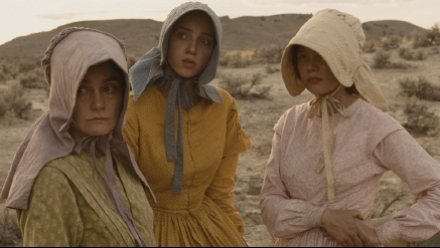
Meek's Cutoff has generated some buzz lately, for being that movie you have to see and pretend to enjoy whether or not you have any actual desire to do so. It's certainly a divisive movie. Complaints were audible as the viewers in my theater exited the film. Of course, also audible were awe, veneration, and theory-generation along the lines of "were they actually dead the whole time?" I thought this theory was a bit silly when I overheard it, but this line of thinking eventually led to my own conclusions. I understand what, I think, this person was trying to communicate. Meek's Cutoff approaches fantasy. It takes place in a mythical, intermediate space in which new things become possible. Really, the movie is about the settlers negotiating this new space. The premise of Meek's Cutoff is loosely based on a real historical anecdote, which, in a way, adds to its mythos. In the film, a fur trapper named Meek claims to know an alternate route around the Blue Ridge Mountains. Taking him at his word, a group of settlers follows him. They become hopelessly lost, and lost they remain.
Monday, May 9, 2011
Double Dose: Women on the Verge and Beaches
I'm going to do something I don't normally do, which is to attempt to pull an Anthony Lane, and find some common denominator in the two very different films I've just watched. Beaches of Agnes and Women on the Verge of a Nervous Breakdown have more in common that you might think, although I might be the main link between them. The latter came to me accidentally. I'm a member of Facets, a Chicago based film organization that has a Netflix-esque rental program. I was told through an automatic email that I was receiving Claude Chabrol's La Ceremonie in the mail. Terribly excited, I tore open the package to find Women on the Verge instead. This was a movie I had always wanted to see anyway, and I took it as a sign from the universe. Agnes Varda is, after watching her latest, my newest fascination. I even recently got a haircut that is exactly like hers, circa 1968. Needless to say, I am feeling spiritual, my stars aligned with my cinematic muses. Aside from my cosmic attachments, the obvious connection between these two movies is that they demonstrate both a love affair with cinema, and an examination of the nature of love itself.
Monday, April 18, 2011
Cape Fear, 1962

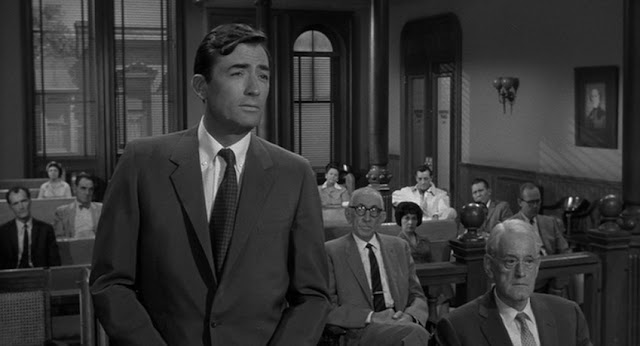
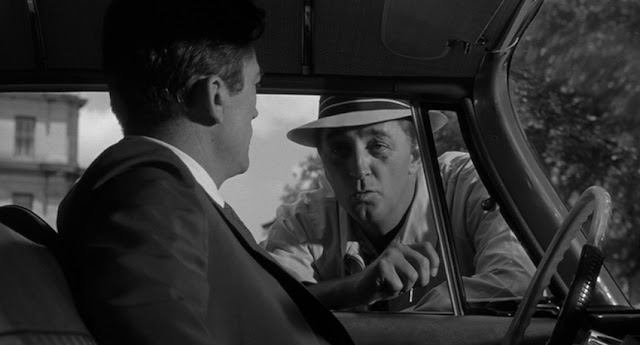
Historically, Cape Fear comes at a transitional period in American Film making. Released in 1962, it came at the very tail end of the period of classic noirs. The 60s were late enough in film history that some directors were already beginning to subvert the genre, although as you might have guessed, most of those directors were not American. Over in France, Jean-Luc Godard was already loosing his aimless gangsters and girlish femme fatales onto the streets of France. But, this J. Lee Thompson film plays it straight. What results is a sort of atypical noir that is stylistically intricate in the vein of Cat People or Diabolique, with a sort of psycho-sexual bent.
Subscribe to:
Posts (Atom)

