Showing posts with label noir. Show all posts

Monday, April 18, 2011

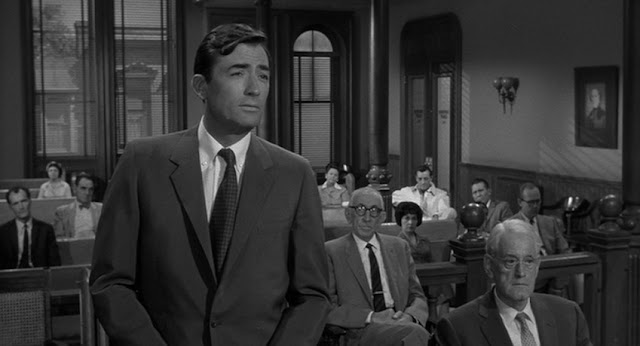
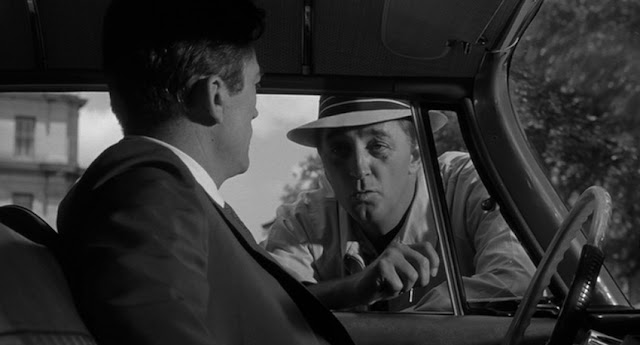
Cape Fear, 1962


Historically, Cape Fear comes at a transitional period in American Film making. Released in 1962, it came at the very tail end of the period of classic noirs. The 60s were late enough in film history that some directors were already beginning to subvert the genre, although as you might have guessed, most of those directors were not American. Over in France, Jean-Luc Godard was already loosing his aimless gangsters and girlish femme fatales onto the streets of France. But, this J. Lee Thompson film plays it straight. What results is a sort of atypical noir that is stylistically intricate in the vein of Cat People or Diabolique, with a sort of psycho-sexual bent.

Sunday, March 20, 2011

Winter's Bone

This contemporary noir set in the bleak winter of the Ozarks is exactly the movie I didn't know I had been waiting for forever. Really though, Winter's Bone borrows very little from traditional noirs. I wouldn't necessarily call it a noir, but maybe a mythical, feminist, coming of age fable about duty and independence... with a noir bouquet. Morally ambiguous characters speak in hard-boiled cadences while treading the thin moral ground between mere survival and criminal activity. Though there are criminals, there are no true villains, just a basic moral code to be negotiated based on individual requirement. Everyone in this small community is just trying to get by through various methods, the most noticeable of which is meth production.


Tuesday, November 2, 2010

The Player


I'm on a Robert Altman kick right now, probably because I keep finding used VHS of his movies from the 90s all over the place. I can't even begin to express my new found love of VHS. Very soon they will be entirely obsolete, but right now there are still buckets of them in video, book, and record stores everywhere with a fruitful combination of small, forgotten films, and great ones that have been re-released with equally great DVD packages. The only problem is that VHS does not supply a means for screen capping, forcing me to scour the internet for representations.

Saturday, May 15, 2010

The Man Who Wasn't There

screen-capture

I still love you, but I've kept you hanging on. I sincerely apologize. It only took me about two weeks to get this post up.

Sunday, March 28, 2010

Alphaville, une étrange aventure de Lemmy Caution

screen-capture-7

I'm going to hurriedly scribble some thoughts on this one. It's been a few weeks since I saw this now, and I've got a backlog of films, most of which will not make it on here. Anyway. I don't remember how I discovered the existence of this movie, but as soon as I learned of this Godard-directed, pastichey sci-fi noir, I leaped upon it immediately, like a moth to the proverbial flame! In a traditional sense, it is very noirish indeed. Godard makes something out of almost nothing, by which I mean, the budget. Most of the scenes are indoors, and except for some flashing lights and machinery, Alphaville could be any city, anywhere. Much of it could have been filmed in someone's basement or high school hallways.

Wednesday, January 6, 2010

Double Indemnity

This is a great old fashioned noir, in which boy meets girl, and girl beguiles boy into committing murder with her. Let's just say it's a classic for a reason. In a device that was probably over-used in noir films, Double Indemnity is told in flashback, as a haggard Walter Neff (Fred MacMurry) dictates his confession to Barton Keyes (Edward G. Robinson). This, as well as the metaphor of train tracks, gives the film a heightened sense of fatalism. From the outset, we know that Neff is doomed. And since he is telling his own story, it is saturated with grim foreboding.

"I didn't get the money, and I didn't get the girl."

"Suddenly it came over me that everything would go wrong. It sounds crazy, Keyes, but it's true, so help me. I couldn't hear my own footsteps. It was the walk of a dead man. "

Naturally, much is made of the relationship between Neff and Phyllis Dietrichson (Barbara Stanwyck), but the relationship between Keyes and Neff is equally interesting, if only because it marks an early version of bromance. Also, their chaste relationship forms an interesting parallel to one between Dietrichson and Neff. While Dietrichson is betraying Neff, Neff is betraying Keyes. As played by Robinson, Keyes exudes a gruff and completely endearing morality. Perhaps the worst aspect of the morass Neff finds himself in is it necessitates misleading his friend.

I like how Wilder uses physical groupings to highlight certain tensions. Here Walter Neff is visually trapped within the frame between Keyes and the one witness to Neff's crime.

I also love this sequence of shots, in which Dietrichson is trapped behind the door to Neff's apartment. The depth of field in these frames creates a really beautiful effect that seems to reduce the characters to one plane, while physically separating them. They seem to exist in a fragile balance on the screen. Once again, Neff is trapped between two major forces--the total morality embodied by Keyes, and the temptation embodied by Phyllis Dietrichson.

Well played, Barbara Stanwyck. Something about this shot tickles me:

And my favorite scene.


"No, I never loved you Walter--not you or anybody else. I'm rotten to the heart. I used you, just as you said. That's all you ever meant to me. Until a minute ago, when I couldn't fire that second shot."

"Neff: know why you couldn't figure this one, Keyes? I'll tell ya. 'Cause the guy you were looking for was too close. Right across the desk from ya.
Keyes: closer than that, Walter.
Neff: I love you, too."

Saturday, December 19, 2009

Miscellaney

A few nights ago after coming home from a long day at work, I was pleased to discover that it is Humphrey Bogart month on TCM. I caught the end of The Maltese Falcon, which was followed by Casablanca. Besides Bogie, these films share a few cast other members, including Peter Lorre and Sydney Greenstreet, who, like Bogie, pretty much reprise their former roles.

I'm ashamed to admit it, but this was the first time I had ever seen Casablanca in its entirety. It was strange to watch a film that was new to me, and yet so familiar. Before I even knew what it was, I had already seen it parodied countless times on shows like Boy Meets World and the Animaniacs.

Of course, the iconic love story element is incredibly touching, but I also like how much of the plot involves crooked politics and law enforcement. The only way to survive in Casablanca is to adopt a certain flexibility when it comes to the law. Of course, if you do this too unethically, you are punished by the Gods of Cinema (as Terry Gilliam might say), which is why Peter Lorre's character disappears so early on. Rick is guided by ethics, though he deflects any suspicions of his soft spots with a hard-boiled exterior.

I also found it amusing how effeminate most of the foreigners are, especially in contrast with Humphrey Bogart's archetypal, brusquely independent American male. I couldn't help flinching a little bit when Ilsa tells Rick that he should do the thinking for both of them, because she is too overcome with emotion to be reasonable.


Although I probably won't properly write about them on here, I recently saw Antichrist and the Road, both of which are very much worth seeing, in my opinion. Although, the former requires a strong stomach. While it was done well enough, I don't really see that a film version of The Road was necessary, or that the screen adaptation presented anything new or insightful.

Sunday, September 20, 2009

The Big Sleep

I don't know what to say about this film that hasn't already been said, so the following is just some thoughts. One this is clear to me; this is one of the most influential noirs ever made. I know because I've seen its influence without even knowing it. For one example, I saw Roman Polanski's Chinatown about a year ago for the first time, but I really should of seen this first. That film, and many other postmodern noirs contain infinite homages to this film.

Philip Marlowe (Humphrey Bogart), while quick-witted and sharp tongued, knows no more than the audience who sits behind him, following his progress through the lamp-lit back rooms, casinos and mansions. It is the undertaking the journey, and not comprehending the twists and turns of the plot that is really important in the film (but if you're curious, Wikipedia has a thorough summary... which still managed to confuse me). This film is famous for its fabulous writing, which combines the screen-writing skills of William Faulkner and Leigh Brackett, who is actually a woman, despite the gender ambiguity of her name. According to imdb, Howard Hawks liked her because she wrote "like a man." What exactly does that mean? Without sentimentality? I'm not sure either.

Anyway. Howard Hawks' film represents a familiar story-line: the detective goes off to work on a seemingly simple case, but things are darker, and more convoluted than they initially appear to be. Marlowe starts out looking for one thing, and ends up looking for something completely different, and of his own volition; he is paid off by Vivian (Lauren Bacall) to stop pursuing the case. But like all good hard-boiled detectives, he is not influenced by money, but by his personal sense of right. There is no sense of dread, of imminent fate, as there is in many classical noirs (like Double Indemnity). The viewer becomes enmeshed in this entropic environment, with no sense of whether the right people will be punished, or who deserves punishing. In the end, Marlowe and Vivian get out of the mess they're in, but that's it. They are left looking at each other, a little bit awed by what they have just seen--unsure of what to make of the new order of the world.

One noticeable theme in this particular film, as in many older films, is the gender construction. As played by Bogart, Marlowe is the epitome of masculinity, while Lauren Bacall's Vivian serves as a perfect foil for him because of her atypical femininity. She is sultry and powerful at the same time. At the outset, Bogart confronts Sternwood (Charles Waldron), the tired, wilting old General surrounded by a bed of Orchids, as if awaiting his own funeral. He is past his prime and emasculated, which is represented by his inability to drink or smoke (oh, and the wheelchair). By comparison, Marlowe, with the perennial cigarette dangling from his lips, is wiry and virile. We get the feeling that, in a way, Marlowe is looking at a mirror of his future self.

As the film goes on, Marlowe's quick wits are not enough to save him from the entropic elements of the universe. In the scene depicted above, he is tied up, literally and metaphorically, while Vivian hovers over him, lighting his cigarette for him. She then saves him by using her own cunning, a position usually reserved for the male. In this film, the women are on an even playing ground--dangerous because of their ability to beguile, lie and evade with the best of their male counterparts, while in the process, turning them into empty and powerless figures like General Sternwood.

Sunday, September 13, 2009

Ace in the Hole

Together, Sunset Boulevard and Ace in the Hole form a pair of atypical noirs--less concerned with seedy crime than they are with the beauty inherent in collapse. For one thing, this serves as a good reminder that the genre that we today call noir is just a vague list of characteristics that characterize a large number of films made from the 30s to the mid 50s. At the time, no one really knew what they were doing; mostly, they were making B movies. Anyway, when it comes to shadows and venetian blinds, this film falls short. There are no detectives in dark alleys. More often than not, the action takes place outside, in direct sunlight on the dessicated plains of New Mexico.


These sun-saturated, dusty exteriors are contrasted against the Dantian darkness within the caves that provide the opportune accident that instigates reporter Chuck Tatum's (Kirk Douglas) breaking story. Driving across the desert on an assignment from his small town newspaper, Tatum accidentally comes across a trading post where a man has been trapped in a collapsed mine. He smooth-talks his way into the center of the operation until he is pulling all the strings. When Tatum enters the mines, there is no need for shadows. Wilder uses the caked dust on his face to the same effect. The capitalistic criticism is overt; Leo (Richard Benedict) is trapped when he goes too deep into the mountain in order to find an artifact that might be worth something. Tatum, in turn, exploits him totally.


With its subtle traces of self-reflexivity, this film forms a sort of set with Sunset Boulevard's backstage Hollywood noir. The tall-tales Tatum spins become the reality for the people flocking to the desert; he is a constructor of the truth. This is also interesting in light of the fact that Ace in the Hole was the first production for which Wilder operated as producer and director, giving him the escalated creative control that he had been seeking. In some shots, the crane that lifts Tatum up onto the cliffs is very much like the type of crane used to lift the camera and director for a bird's eye shot. As Tatum stands atop the cliffs looking down at the flock of gawkers below, it is not hard to imagine Wilder in his place, uttering directions through the megaphone. With all the inner frames of the film, Wilder also seems to be giving consistent references to the framing lens.

The setting of the film, in combination with the use of deep focus and wide angles creates an equation for some compelling and memorable imagery, which it delivers. When Tatum stands over the ant-like crowd, the camera reveals his power over them. My favorite moments are when the camera sweeps over the crowds that have convened for the literal "media circus" that ensues. The build-up to this "circus" is intriguing as well. It starts with an almost unnoticeable passing of balloons in the distance and soon becomes a frenzy.

Friday, September 4, 2009

Out of the Past


The plot runs thick in Jacques Tourneur's Out of the Past. I'm still not sure that I caught every twist and turn and every motivation, but that's only for real sticklers. The film's structure is relatively unique, in that the first third is told in flashback, while the rest occurs in the present.

Jeff Bailey is a former private detective who is now living in a small town with his lover, Ann. Bailey is deftly played by Robert Mitchum, who is, as always, full of win. As it turns out, he has a past he has kept hidden, which he is forced to reveal when it tracks him down. Here, the film goes into a lengthy flashback, in which we see that Bailey has been hired by crime lord Whit Sterling (Kirk Douglas) to track down his girl, Kathie (Jane Greer) and bring her home. In doing so, big surprise, Bailey falls for her and they go on the run. Back in the present, Sterling seeks revenge by attempting to frame Bailey for murder, and weaving a plot almost as intricate as the mis-en-scene that the narrative is all staged upon.


What is really eye-catching about this film is its look. Each frame seems to have been crafted with deliberate intricacy, as a result, I often found myself lost in the imagery, exploring the canvas. The film time is divided between natural settings and urban ones. With the mis-en-scene, Tourneur draws out a sense of ominous entrapment from both. The film opens with an almost pastoral view of Bailey and his new lover, Ann, rendezvousing by a lake. Contrasting this, the waterfront in Mexico becomes a cage with the use of the fishing net suspended behind Bailey. At the very end, the claustrophobia of the woods, as well as the skeletal shadows of the trees across his face, demonstrate a final trap from which Bailey cannot escape. I found these natural settings the most intriguing because they are relatively out of place in a noir, but with Tourneur's skill, they are no less bleak than the angular buildings and neon lights of the city. Kathie, while standing on a balcony overlooking the mountains, recalls them fondly, as a representation of freedom, but this is an ideal that does not hold up in this dark universe.


As a character, Bailey is the standard noir private eye with a personal code of honor. Despite stealing Sterling's girl and running off with her, he feels burdened by the money he owns the crime lord. For this reason, he is easily drawn in by the vengeful Sterling, all the while knowing that he might be confronting his doom. As the two men note, it is in their respective natures to follow the courses of action they are both now following, as if they cannot help it. This is also a line that Kathie repeatedly uses when she gets in trouble; she couldn't help it, her hand was forced. This is true in the sense that she can't help but do whatever she can to help herself. One gets the sense that the characters are all trapped by their natures, that every step of the narrative is predetermined, not by fate in the traditional sense, but by a fate that results from the nature of the self, an unwillingness to swerve from their motivations.

This is a great film--as entertaining as it is beautiful.

Monday, August 31, 2009

The Big Heat


Lately, I've had a fondness for noir. I've developed an interest in American genre films in general. Thinking in genres lends new weight to films that seem contrived and stereotyped. Actually, it is this perceived stereotyping and following of convention that make them so interesting. This reverence I have for classical genres makes me wonder sometimes if I'm too quick to disregard contemporary films whose themes seem too overplayed or omnipresent. For instance, this "bro-mance" revolution might turn out to have unforeseen cultural significance. Honestly, it probably will. I'm sure I'll have a post dedicated to this at some point, but right now, back to the initial topic. Out of classic American genres, film noir is by far the most interesting, and most beloved of genres, both within our country and without.


Directed by famous German emigre, Fritz Lang, The Big Heat is a traditional noir in all aspects, depicting the confrontation of a police officer with dark forces outside of his control. In The Big Heat, Sergeant Bannion (Glenn Ford) falls deeper into city's underground as he delves into the suicide of a fellow officer. As his investigation progresses, he discovers just how little the law actually affects the order of his community. Instead it is the mob boss, Mike Lagana (Alexander Scourby), who wields utter control over the city. Bannion quickly throws out the rule book once he realizes that there is a new set of rules, previously elusive to him. Abiding by a moral code that separates him from the other characters, he strives for what is right no matter what the consequences. His persistence loses him, first his wife, then his official title, leaving him to wander alone through the deceitful underbelly of this unnamed city.


In a confrontation with Lagana's right hand man, Vince Stone (Lee Marvin), Bannion meets Debby Marsh (Gloria Grahame)--a woman who initially repulses him because of her willingness to stand by a man she acknowledges is no good, just to reap the benefits of his association. In her own defense, she claims that there is a good side to him. Still, when Vincent gets wind of her rendezvous with Bannion, he scars her face with a hot pot of coffee. From this point on, her face is two-sided, signifying the moral duality that Debby embodies. Once she has been outwardly marked with the signification of evil, she acts accordingly. Acknowledging that Bannion is too good at heart to do what needs to be done, she takes it upon herself to take action, knowing that the resulting murders make her no better than her boyfriend, Vince. As she contemplates her actions, she sits in the deep contrast of the shadows cast by those beautifully stereotypical venetian blinds.


With her hard drinking and lascivious ways, Debby also forms an interesting opposition to Bannion's guileless, loving wife. In her final moments, Debby asks Bannion to describe his wife to her, as if wanting to extract her virtues in an improvised version of last rites. As she dies, the camera rests on her face, and she turns her clean, un-scarred cheek upwards. In this way the question of right and wrong goes unsolved. In a world where there are no real rules, is her revenge justified? Is killing one corrupt woman in order to release the city from the grasp of Laganda really wrong? Most of all, is it wrong that she did these things out of her love for Bannion? The Big Heat depicts a world typical of noir, where right and wrong are as subjective as a detective's preference for cigarette brands, where the law is thrown aside in pursuit of rights that lie outside the designated lines.